Showing posts with label innovation. Show all posts

Wednesday, 25 January 2017

Creative Problem Solving

I returned from a Scottish Institute for Business Leaders meeting yesterday full of the joys.

As with every one of their meetings there was a speaker in the morning - this time Paul Fletcher speaking on innovation. He certainly got us thinking about innovation, the need for it, what it is, how others do it well, and what it looks and feels like to do it. A Hackathon anyone?
In the afternoon the SIBL members and guests split up into smaller groups to address real life issues, and to act as a executive board if you will for each other.

Two of the groups followed the normal pattern of using Action Learning to discuss, explore, shift and then to identify actions needed to move a situation they're struggling with forward.

As with other times I've attended a meeting Drew Pryde, SIBL's chairman, let a self selecting group come with me. Over the years these sessions have included all of the unconventional tools I use in my work, including a walking session in the woods. These are tools I use when I'm coaching procurement professionals, delivering training, facilitating procurement team strategy days, or as in this case supporting business leaders from other professions.     

As we'd been talking about innovation my sales pitch was "If you do what you've always done, you'll get what you've always got. Let's innovate and do something different, something unconventional, but something that's very effective too." Basically, if you've not solved the problem via conventional means, and perhaps keep going round in circles, let's do something different instead.

I'd brought a number of tools with me, and during the initial scene setting and challenge sharing start to the session, we decided to focus on two of the tools - pipe cleaners and collages.

WOW.

Can I say that again WOW. (and sorry you have to take my word for it.)

Perhaps because I've let go of the apologies about using the tools. Perhaps because I've got better at making people feel less resistant to something different.

What ever the reason, everyone there came away enthusing about the tools, and the insight and new way of looking at the situation they'd brought to the session to explore.
Confidentiality restricts what I can share, but everyone's body language had noticeably shifted at the end of the session when speaking about their situation. You'll find other non confidential and, therefore, more detailed explanations of using pipe cleaners and collage by following the hypertext links.

One member commented that the process allowed the individual to guide themselves through the challenge towards resolution. That is, it wasn't so much other people there making assumptions about what message a collage had to convey, but the individual's unconscious helping them notice that which would be of most benefit.

On reflection I see that others weren't telling the other person what they would do, or what they thought they should do - which often can raise the barriers to change. You only have to think about how you felt last time someone told you what they thought you should do to get a sense of that. I'd go so far as to say every time someone tried to provide a solution, rather than just ask a question to help the person explore the situation more fully, I stepped in.

It links to the morning's session. Paul said "innovation is just knowledge having fun" - I'd say that's what the unconventional tools are about. They also support a saying I saw recently
 :
We're the best people to give ourselves advice. We just need the right space, the right support, great questions, and an environment in which we feel safe enough to keep our barriers down so that solutions can be found, and transformation take place.

When will you next try something different to help get you out of the challenge you're facing?

Alison Smith
The Purchasing Coach
Using unconventional tools to unlock the potential of procurement teams

If you'd like to discuss how I could run similar sessions for you and your team do please get in touch. alison@alisonsmith.eu +44(0)7770 538159

Saturday, 7 January 2017

The Purchasing Coach: Creativity & Innovation

One of my Moo business cards uses the above gaping void image  

creativity always with purpose. 

Just as the use of unconventional tools I talked about yesterday is always with purpose too.

'If we keep doing what we've always done we'll get what we've always got' may be an over used saying but it's true - especially when the outcome we're getting isn't aligned with our goals. 

It's only through creativity and innovation that we can truly understand the opportunities that exist. The challenge is we so often expect creativity to appear just because we've put it on our to-do list, or by command when we all sit around the meeting table in the office, and decide there and then we're going to write a list of innovative solutions to the challenges we're facing. 

Change is never going to happen if we stay in our comfort zones and think we already know it all, or believe we've already tried it, and it didn't work! 
Change also isn't going to happen if we operate within our safe and known stereotypes. A stereotype that for procurement were described as Mr Wolf by some suppliers in 2016!  
Change comes from thinking differently, from changing our perspective, and from opening our minds to the possibilities that have yet to make themselves known.

Change might therefore come from deciding to take the red pill (see the extract from the film The Matrix below)
Or from metaphorically walking through door B (in the middle of this collage) and avoiding all the A doors around the edge that just lead us to back to what we've been doing for some time.
Change might also come from going in squares and not circles as happened on a recent workshop,
or from allowing the pipe cleaners to determine how to move from ineffective communication 
to joined up communication.
or from going for a walk 
Or any other activities that get us out of our normal way of thinking.

What gets you into a creative or innovative frame of mind, and when will you next need its support to get those creative juices flowing in order to find the solutions you're searching for, and that have thus far eluded you?

Alison Smith
The Purchasing Coach
Inspiring Change Inside and Out

This first week of 2017 I'm exploring the topics that make me tick - those topics that inspire my action (including the odd rant), and that are subjects that I share often in the procurement consultancy, speaking and coaching work that I do. They're also subjects that I have expertise in, enjoy, and that also make a difference when applied well.

Posts so far this week have covered:
  • Don't leave your humanity at the door - because I get frustrated when I hear people tell me that we have to leave our authentic selves/humanity at the office door, and instead apply rules that cause other people and the planet great distress. I believe taking our humanity to work with us is what being a B Corp is all about, and is something I'm going to be talking to B Corporations about during the year. 
  • Language - because words have power, and we often unconsciously use words that hinder us achieving our goals.  
  • Soft skills - because if your goals rely on working with other people soft skills are the fastest way to achieving your goals
  • Use of unconventional tools - as above because they're particularly good at bypassing barriers to change. 
  • Inspiring change - because effective change comes from motivated people. 
  • Creativity and Innovation - as above.
The remaining topic to be covered tomorrow is:
Another means of finding out more about who I am, what I do and the results achieved can be found be reading 2016: My year in blogs which was written at the end of 2016.

Friday, 25 November 2016

How could pipe cleaners have the answer?

During a recent half day Procurement Innovation and Creativity clinic via webex, to a group of three people over in Atlanta, someone mentioned they'd attended a workshop where they'd used pipe cleaners to introduce themselves.

As anyone who knows me well will understand it wasn't long before I had 500 multicoloured pipe cleaners on the way to me, with a desire to find a means of using them at the next workshop.

Whilst I love unconventional tools, I will only use them if I think they align with the intention and goals of the workshop, and support the learning outcomes. Which meant I hadn't quite got my head around how I'd use them on the supplier management workshop this week in Warsaw.

However the delegates were keen to understand different ways of resolving problems with suppliers and so I found myself uttering the words "let's try the pipe cleaners". 

I then asked them to use the pipe cleaners to represent the current unsatisfactory situation they wanted some insight on, and then to do one for the best possible outcome. 

One result looked like this:
Which became this:

Or this: 
Became this:

or the bottom structure became the top for both of these examples


I could continue - but assume you get the idea.

I then asked them in turn to describe the difference between the two sculptures - these are the notes I made at the time:

The words used to describe the 2 sculptures certainly seemed to contain the kernel of an idea within them. Ideas that, whilst perhaps not revolutionary, had hidden close to the surface of their owners subconscious only able to be expressed via the sculptures that had been developed.

We discussed the potential solutions that were emerging as a result. What I then asked the delegates to do was identify actions they could take as a result of the guidance provided by these sculptures - or even sculptures others had developed.

One insight for me was about our ineffective use of the words 'needing to improve communication'.

Unconventional tools certainly have their place when the solution is eluding you, and they can certainly speed up the process to achieving resolution.

If you're struggling with a problem what tool can you use to bring forth the very solution that's thus far hidden from you?

Alison Smith
The Purchasing Coach
Inspiring Change - inside and out 

Some of the other unconventional, yet effective, tools I use in workshops and coaching include: 
Follow hypertext links to previous blogs on the subject highlighted.

Monday, 11 April 2016

Problem Reversal

One of the tools we introduce in options generation for both category management workshops and supplier relationship management sessions is Problem Reversal.
Someone last week described Problem Reversal as a great way to shift your way of thinking, and viewing a situation. Two of the attendees used it on a real life situation. Having thought they'd previously assessed the situation accurately, they were both blown away by the solution they discovered by using this process.

In essence all you do is state the problem you've got, and ask yourself "how do I get even more of the outcome I don't want." For example:

  • If you've not got enough time to do everything the problem to work on is "how do I have even less time to do everything"
  • If you're wanting to eat more healthily the problem becomes "how do I eat unhealthily"
  • If you're wanting more life balance the problem becomes "How to I have even less life balance"
You then simply need to list all the ways you can achieve the stated problem. For example:

'How do I have even less time to do everything' becomes a list that looks like this:
  • Say yes to everything
  • Never say no
  • Offer to do more work
  • Don't ask for help 
  • Don't prioritise work
  • Never delegate to others
  • Aim for perfection for everything I do
  • Ignore the 80/20 rule
  • Work work work, and no play
  • Get really serious, and forget to laugh
  • Don't get enough sleep so everything takes me longer to do
  • Eat junk food so I can't concentrate
  • Don't drink enough water - ditto
  • Take no exercise 
  • Worry about everything 
  • Be negative
  • Tell myself it's impossible to do everything 
Do you get a sense that by being really absurd sooner or later you'll then realise how many of these activities you're doing, and then be able to identify an action plan to stop doing them?  

Exploring 'How do I eat unhealthily' would identify actions such as:
  • Don't plan what I'm going to eat
  • Don't have any food in the house
  • Get into the routine of using takeaways
  • Keep my head in the sand about healthy eating
  • Only have unhealthy food in the house
  • Don't find out how to cook easy and quick healthy meals
  • Only know how to cook healthy meals in 90 mins
  • Don't allow any time for cooking
  • Don't find out what options are available when travelling
  • Don't request healthy food when booking buffets at work
  • Don't have any healthy snacks in your bag so you have to use the vending machine
  • Only know how to make healthy foods you hate
  • Eat a whole cake a day
  • Fill the cupboards with sweets and cakes
  • Don't look for healthy options on the menu
  • Skip breakfast  
Again the aim is to be absurd, and to write all the ways we can eat unhealthily. Then turn them on their head, and investigate how to do the opposite - or at least not fall into the trap of doing many or all of these activities.

Considering 'How do I have l even less life balance' generates a list that includes:
  • Eat unhealthily (see list above)
  • Have no time to do anything (see list above)
  • Have no idea what my values are that motivate me
  • Work, work, work
  • Don't set any goals
  • Don't consider what's holding you back  
  • Prioritise work over everything else
  • Accept the belief that midnight emails, and weekend working is the norm and acceptable
  • Don't ask for help
  • Keep constantly on the go - on breaks, no rest, no time to think
  • Never go on a holiday
  • Become an adrenaline junkie 
The post where I shared the outcome of using the Transformation Game to achieve work/life balance may also be helpful.

Next time you've got a problem to resolve you may want to reverse it, and find out how to get into even more of a pickle first!


Alison Smith
The Purchasing Coach
Inspiring change - inside and out  

Wednesday, 1 August 2012

Anything is possible

I've put the above picture in my Anything is possible board on Pinterest because it is.

For me what happened at the opening ceremony of the London 2012 Olympics is a great reminder that next time we have a creative and yet possibly a little too out there idea, not to make assumptions about whether others will accept it or not and to simply put it forward.

I'd hazard a guess that a larger majority of people would have discounted suggesting the idea to the queen of her meeting James Bond and seemingly going for a skydive. Yet someone did and she said yes and it went on to being one of the surprising highlights of the evening.

Next time you get a creative idea just remember ANYTHING IS POSSIBLE.

Alison Smith
The Purchasing Coach
Sowing the seeds of potential in purchasing in your organisation

Picture of the Queen, James Bond and Corgis Source: bbc.co.uk via Alison on Pinterest

Tuesday, 19 June 2012

Young people are part of the solution

"Young people are part of the solution and not the problem - they are ESSENTIAL to growth of the economy and our nation" Angela Constance MSP at last week's Young Enterprise Scotland awards. 

I was there in my capacity as business adviser for a team of 17/18 year olds from Balwearie High School, Kirkcaldy who were there representing Fife having won the local finals. 15 other teams from across Scotland where there all hoping to win and move forward to represent Scotland in the UK Young Enterprise Finals.


Since August 2011 these teams had all set up a company and done what we all have to do - choose an MD and allocate other senior roles within the business, issue shares, think of a product or service, decide on a company name, develop branding & pricing, do some market research, undertake marketing, get their product into production, sell it and then provide customer service and handle complaints. In addition they also had to write a report and present in front of other YE teams.

Their learning journey covered many essential behaviours needed for business today:
  • Team development, building and working
  • Communication
  • Influencing
  • Conflict resolution - they certainly weren't slow to change or even sack the MD if things weren't progressing to plan
added to which functional skills for:
  • HR
  • Purchasing
  • Production
  • PR
  • Market Research
  • Marketing
  • Merchandising
  • Sales
  • Finance
I particularly loved the issues the eventual winners shared, and had to overcome, around purchasing the cup - dealing with overseas, minimum order sizes, quality control, change of branding to reduce number of colours used in order to reduce costs etc. 

Every young person there said they'd learnt much from the experience and many intend to set up their own companies once they leave university.

They and their link teachers can't do it alone - every school needs a business adviser. And that's where you come in - can you offer your support to your local school? You can provide as little or as much support as you are able. One year I was able to visit weekly - this year I only managed once or twice a month. What I do know is the support from business advisers, even if simply just believing in them, makes such a huge difference.

If you agree with Angela Constance that young people are part of the solution what are you doing to support them now so they make the decisions in the future that we can all be proud of?
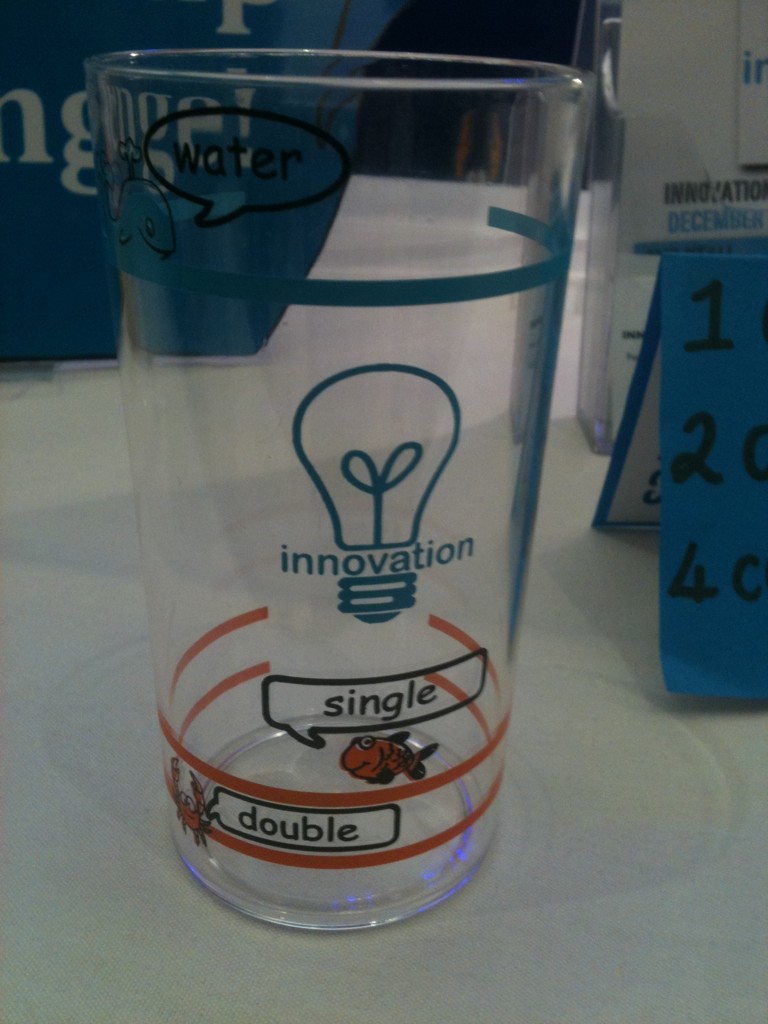
I'm sure you all join me in wishing the Scottish winners Innovation (pictured above) with their measure up cup (ditto) all the very best for July and all the other finalists from across the UK who will be joining them.

Alison Smith
The Purchasing Coach
Sowing the seeds to young people wanting a career in business and particularly Purchasing